

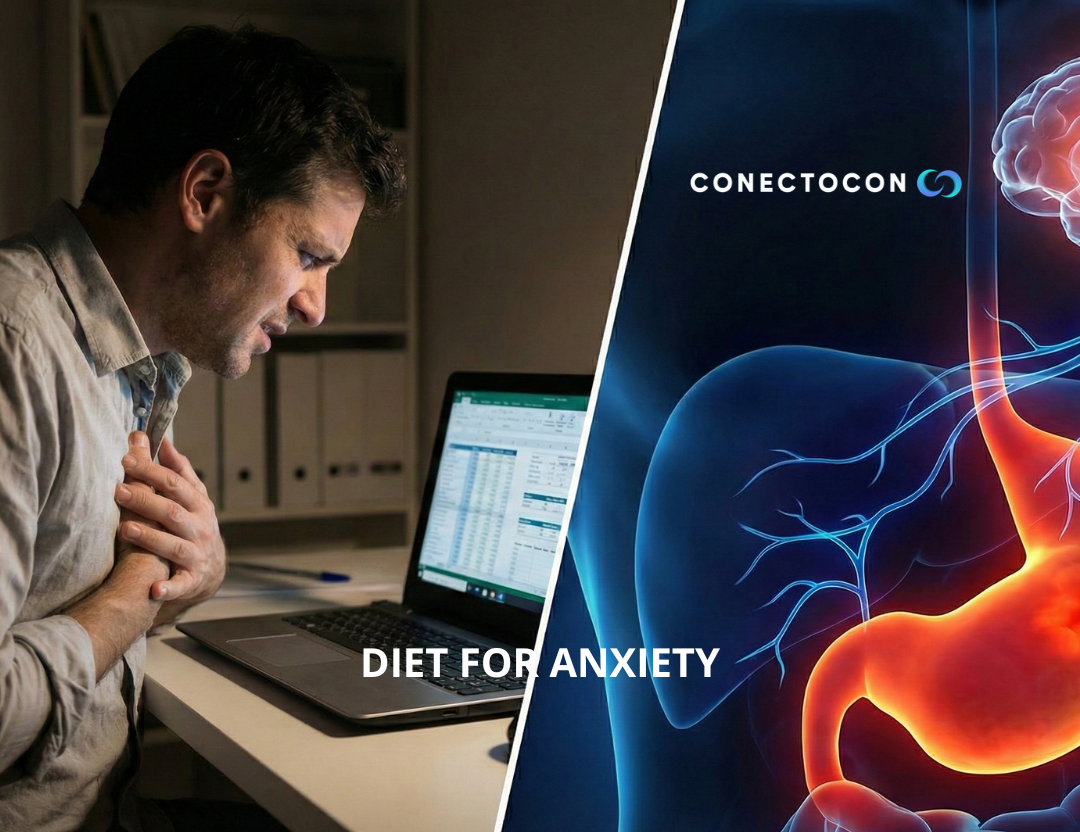
You immediately assume you are having a panic attack caused by workplace stress.
But what if your mind is perfectly fine? What if the real culprit is actually sitting in your stomach? Welcome to the hidden clinical epidemic known as metabolic anxiety.
Here is the truth:
Millions of people are trying to meditate away a biological fire. As a clinical nutritionist, I see brilliant people daily who believe their mental health is crumbling. Yet, their anxiety is often a physiological cry for help from a starved, inflamed microbiome.
The Illusion of Psychological Anxiety
We are taught that panic lives exclusively in the brain. However, modern clinical nutrition proves otherwise.
When you eat a breakfast high in refined carbohydrates and low in fiber, your blood sugar spikes violently. What goes up must crash down. Two hours later, your glucose levels plummet into the basement.
Think about it for a second.
To your body, a sudden drop in blood sugar is a life-or-death emergency. To survive, your adrenal glands pump out massive amounts of adrenaline and cortisol to force your liver to release stored energy.
Your brain feels this sudden rush of adrenaline. It looks around the quiet office, finds no real danger, and misinterprets the chemical surge as a psychological panic attack. You are not stressed; you are just experiencing a severe blood sugar crash.
“Treat your blood sugar like a sleeping baby. If you spike it, it will wake up screaming.”
The Gut-Brain Axis: Your Second Brain is Panicking
The connection between your food and your mood goes much deeper than glucose. It travels through the vagus nerve, an information highway connecting your gut directly to your brain.
When you consume ultra-processed foods, artificial emulsifiers, and industrial seed oils, you damage your intestinal lining. This creates systemic neuroinflammation.
When your gut is inflamed, it sends constant “danger” signals up the vagus nerve. Your brain receives these signals and locks your nervous system into a chronic state of fight-or-flight.
The craziest part?
Over 90% of your body’s serotonin—the “happy chemical” that anti-anxiety medications try to boost—is actually manufactured in your gut. If your microbiome is broken, your joy factory is shut down.
3 Foods That Trigger Biological Anxiety
If you want to protect your mental health, you must stop feeding the panic. Here are the top biological triggers:
Acellular Carbohydrates: Flours and sugars stripped of their natural fiber matrix. They hit your bloodstream like a freight train, guaranteeing an adrenaline-fueled crash.
Industrial Seed Oils: Highly refined oils (like soybean or canola) that drive severe cellular inflammation, silently triggering your immune system.
Liquid Sugar Diets: Energy drinks and sweetened coffees give you a dopamine hit followed by severe nervous system exhaustion, crushing your workplace productivity.
“Your gut is the CEO of your mood. Stop feeding it garbage and expecting premium leadership.”
The Coffee Paradox: Is Your Productivity Hack Causing Global Panic?
Let me put on my clinical nutritionist hat for a moment. I am not here to ban your favorite foods forever.
You can absolutely enjoy the things you love in smaller quantities. The poison is always in the dose. A single cup of coffee is not your enemy. But we need to address the massive, caffeinated elephant in the room.
We are currently living in an era of global, chronic anxiety. And our relentless, unchecked caffeine consumption is pouring gasoline on that biological fire.
According to recent data on occupational health and workplace productivity, modern professionals are using excessive coffee to mask severe metabolic exhaustion. We are drinking multiple cups a day just to survive the corporate grind.
But here is the biological catch.
Caffeine aggressively stimulates your adrenal glands. It floods your nervous system with cortisol and adrenaline. It makes your heart race, your breath shallow, and your palms sweat.
These are the exact physiological symptoms of a clinical panic attack. Your brain cannot tell the difference between a harmless caffeine overdose and a real, physical threat. You are literally inducing anxiety in a cup.
“You are not drinking energy; you are borrowing it from your nervous system with extremely high-interest rates.”
Smart Swaps to Calm the Vagus Nerve
If you want to protect your mental health, you must stop abusing your adrenal system. Try swapping your third or fourth cup of coffee for these clinical alternatives:
Matcha Green Tea: It contains caffeine, but it is naturally bound to an amino acid called L-theanine. This creates a state of calm, laser-like focus without the anxious jitters.
Golden Milk (Turmeric Latte): A potent, anti-inflammatory drink. It actively soothes the gut-brain axis and reduces neuroinflammation instead of overstimulating it.
Peppermint or Chamomile Infusions: The perfect afternoon upgrade. These herbs actively signal your vagus nerve to switch from “fight or flight” into “rest and digest” mode.
The Clinical Protocol: Eating for Nervous System Regulation
So, how do we turn off the biological alarm bells? We use the whole food matrix to our advantage.
You must build plates that anchor your blood sugar. Every meal needs a solid foundation of quality protein, healthy fats, and dark, polyphenol-rich fibers. This combination digests slowly, providing a steady, calm stream of energy to your brain.
Furthermore, this is not just about you. Early metabolic programming shows that the diet we feed our children shapes their microbiome and nervous system responses for adulthood.
But wait, there is more.
When you replace synthetic supplements with real, nutrient-dense foods, you provide the exact building blocks (like natural magnesium and tryptophan) your gut needs to synthesize calming neurotransmitters naturally.
Reclaim Your Metabolic Peace
Here is your “Eureka” moment: You are not broken, and it is not all in your head.
For years, you may have blamed your character, your job, or your willpower for your diet-induced anxiety. Today, you know the biological truth. By changing what is on your fork, you can literally rewrite the chemical messages being sent to your brain.
Are you ready to stop faking panic attacks and start eating for peace? Look at your next meal and ask yourself: Is this food going to calm my nervous system, or is it going to sound the alarm?
Frequently Asked Questions (Clinical FAQ)
Can my diet actually cause a panic attack?
Yes. When you consume high-sugar or ultra-processed foods, your blood sugar spikes and then rapidly crashes. Your body perceives this severe crash as a life-threatening emergency and releases massive amounts of adrenaline. Your brain misinterprets this adrenaline rush as a psychological panic attack, even when you are not mentally stressed.
Does coffee make anxiety and panic attacks worse?
Absolutely. Caffeine is a powerful central nervous system stimulant that triggers your adrenal glands to release cortisol and adrenaline. Drinking too much coffee creates the exact physiological symptoms of anxiety (racing heart, shallow breathing, sweating), effectively pouring gasoline on your metabolic stress.
How long does it take to calm the gut-brain axis with food?
While rebuilding your entire microbiome can take weeks or months, you can stop the blood sugar rollercoaster immediately. By switching to a whole food matrix rich in quality protein, healthy fats, and fiber at your very next meal, you can stabilize your glucose levels and prevent adrenaline-fueled panic within 24 hours.
📚 Clinical & Scientific References (Click to expand)
The nutritional and clinical claims in this article are supported by the following peer-reviewed literature:
- Occupational Health & Diet: Effectiveness of Nutrition, Lifestyle, and Working Environment on Occupational Health and Productivity. International Journal of Business Reflections (IJBR). View Study
- Gut-Brain Axis & Mood: Recent literature on neuroinflammation and dietary impacts on psychiatric health. Journal of Affective Disorders (ScienceDirect). View Study
- Whole Food Matrix: Clinical analysis of nutrient absorption from real foods versus synthetic supplementation. Nutrition Research (ScienceDirect). View Study
- Early Metabolic Programming: Impact of early diet on the pediatric microbiome and lifelong metabolic responses. Journal of Pediatric Health Care (ScienceDirect). View Study
Click the letters to find the 12 hidden words and calm your nervous system.