

Your brain is being rewired every time you take a bite. Most people believe that a romantic dinner is just about the candlelight or the wine; however, as a biologist, I can tell you it is a high-stakes chemical negotiation. Every ingredient you choose acts as a biological command, capable of orchestrating attraction or stabilizing a bond in seconds.
Consequently, we enter the fascinating field of Neurogastronomy. This is the sophisticated bridge between the molecules on your plate and the neurotransmitters in your head. Whether you are navigating the nerves of a first date or looking to reignite a long-term connection, the solution isn’t just in what you say—it’s in the biochemistry of what you serve.
The First Date: Engineering the Dopamine Spike
In a first encounter, you don’t want “comfort”; you want novelty, excitement, and reward. You are looking to activate the Dopamine reward circuit. In this context, your menu should act as a stimulant for interest and engagement.
The “Shared Risk” Strategy with Capsaicin
To break the ice, consider ordering slightly spicy dishes, such as a Thai curry or a spicy ceviche. These contain Capsaicin, a molecule that triggers a mild pain response. In response, the brain is forced to dump a massive load of endorphins and dopamine into the system to compensate. This biological “high” mimics the physiological symptoms of attraction—racing heart and heightened senses—leading your date to subconsciously associate that excitement with your presence.
Infatuation in a Square: Dark Chocolate
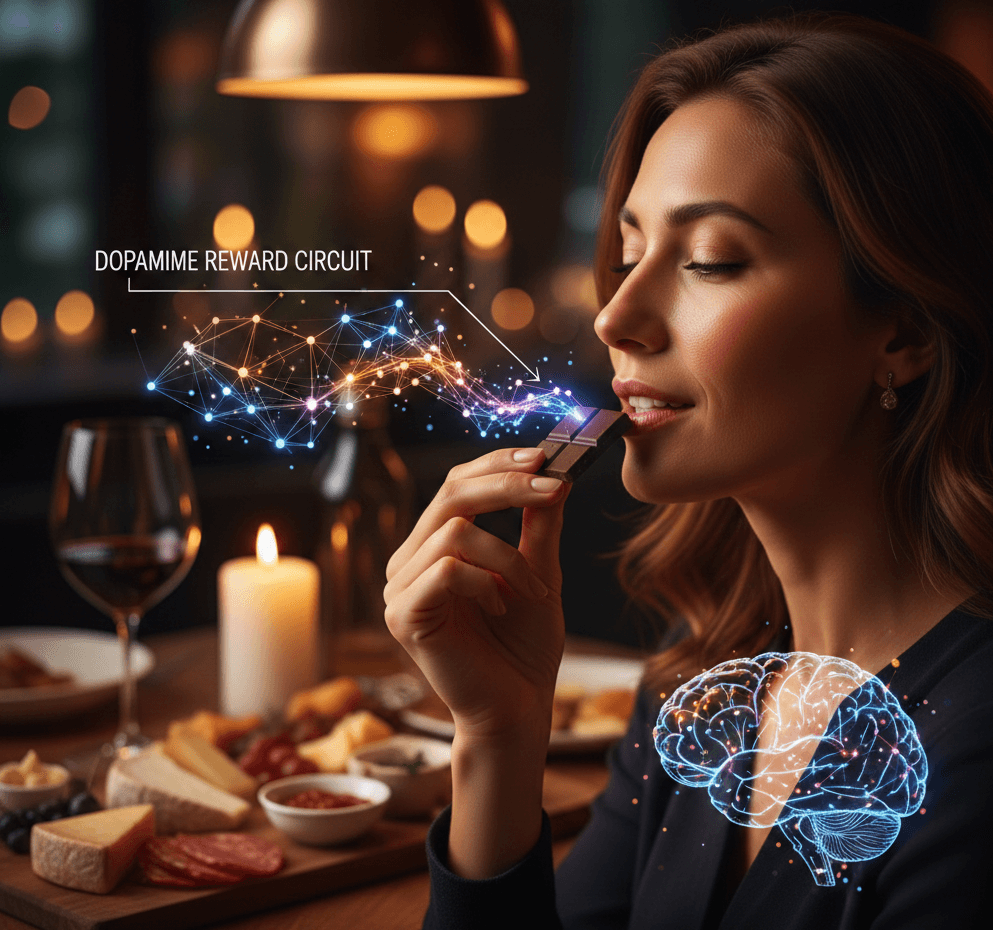
Furthermore, the dessert choice is crucial. High-quality dark chocolate (70% or more) is a neurochemical masterpiece. It contains Phenylethylamine (PEA), the exact compound released by the brain during the first stages of falling in love. Therefore, ending the night with a chocolate-based treat isn’t just a cliché; it’s a strategic move to foster focus and affection.
Can you find the chemical keys to your brain?
Reigniting the Spark: The Oxytocin Protocol
For long-term couples, the goal shifts from “novelty” to “safety and attachment.” To reignite a connection, you need to orchestrate the release of Oxytocin, the “bonding hormone.”
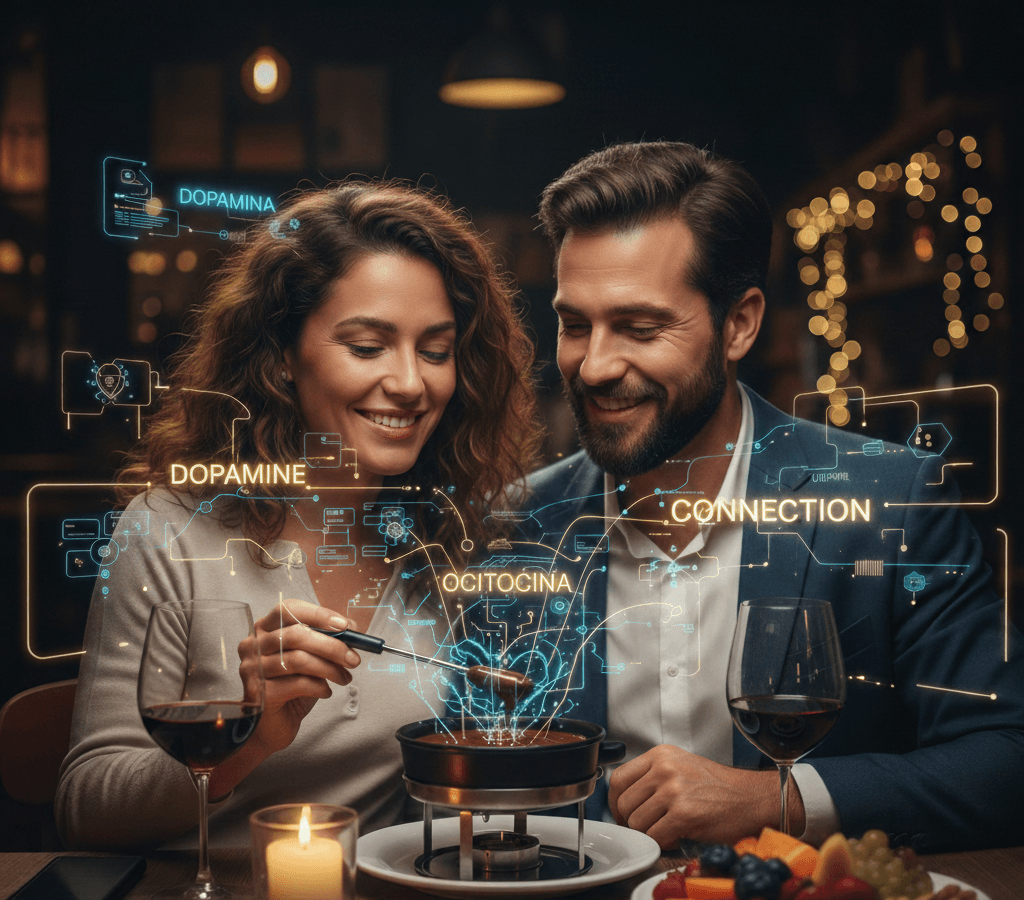
The Power of Commensality (Sharing): Shared platters—like a fondue, a rustic charcuterie board, or even a pizza made together—force synchronized movements between two people. As a result, this physical harmony signals to the primitive brain that you are part of the same “tribe,” effectively lowering cortisol and raising mutual trust.
Tryptophan and Serotonin: To move away from the stress of daily life and back into intimacy, serve foods rich in tryptophan, such as salmon or walnuts, combined with complex carbohydrates. This facilitates the production of Serotonin, act as a neurochemical “safety net” that makes the conversation feel deeper and more authentic.
The Gut-Brain Axis: Protecting the “Mood”
You are not just eating for your tongue; in fact, you are feeding your “second brain.” The Gut-Brain Axis is the superhighway that connects your microbiome to your emotions. If the meal is too heavy or inflammatory, the brain enters a state of social withdrawal.
To avoid this, prioritize:
Light Proteins: To keep the energy focused on the conversation, not a heavy digestion.
Psychobiotics: Fermented foods or antioxidant-rich berries that shield neurons from oxidative stress, ensuring mental clarity and “glow” throughout the night.
Conclusion: Take the Controls of Your Biological Narrative
In summary, Neurogastronomy proves that you are the architect of your own social and internal state. You no longer have to be a victim of a “bad vibe” or an awkward silence. By extension, understanding the chemical connection between nutrients and your brain allows you to finally align what you eat with the depth of connection you want to build.
The next time you choose a restaurant or prepare a meal for someone special, remember: you aren’t just consuming calories. Ultimately, which neurotransmitter are you activating to build your bond tonight?
Neurogastronomy: Frequently Asked Questions
📚 Click to see scientific references
SHEPHERD, Gordon M. Neurogastronomy: How the Brain Creates Flavor and Why It Matters. 1. ed. New York: Columbia University Press, 2011. Available at: Amazon Link.
SPENCE, Charles. Gastrophysics: The New Science of Eating. 1. ed. London: Viking, 2017. Available at: Amazon Link.
NAIDOO, Uma. This Is Your Brain on Food: An Indispensable Guide to the Surprising Foods that Fight Depression, Anxiety, PTSD, OCD, ADHD, and More. 1. ed. Boston: Little, Brown Spark, 2020. Available at: Amazon Link.
ALVARENGA, M. S.; FIGUEIREDO, M.; TIMERMAN, F.; ANTONACCIO, C. (Eds.). Nutrição Comportamental. 1. ed. Barueri: Manole, 2015. Available at: Amazon Link.
* Technical review and analysis conducted by Inessa, PhD in Entomology & Biodiversity Conservation.